CapCut is still an easy way to make TikTok videos, Reels, and YouTube Shorts. Its templates and automatic tools save time, especially on a phone.
The free version does not include everything, though. Some effects, templates, cloud features, and AI tools sit behind paid plans or credit limits. CapCut also says Pro prices vary by region, device, platform, taxes, and current promotions.
That leaves a simple question: which editor fits your work better?
Nero Video makes sense for Windows users who prefer a one-time purchase. DaVinci Resolve gives experienced editors much deeper control. Movavi is easier to learn, while FlexClip works directly in a browser. On mobile, VivaCut, InShot, VLLO, and LightCut each solve a different problem.
This guide compares the same eight apps across price, platform, watermark rules, and day-to-day editing.
The short answer
App | Best fit | Platforms | Free option | Watermark policy |
Nero Video | Affordable desktop editing | Windows | 7-day trial | Trial: watermark; paid version: no watermark |
DaVinci Resolve | Professional editing | Windows, macOS, Linux | Full free version | Free: no watermark, unless you use Studio-only effects |
Movavi Video Editor | Desktop beginners | Windows, macOS | Trial | Trial: may add a watermark depending on the build; paid version: no watermark |
FlexClip | Quick browser-based editing | Web | Free plan | Export limits depend on the plan |
VivaCut | Layered mobile edits | Android, iOS | Freemium | Free: watermark; Pro: no watermark |
InShot | Quick social videos | Android, iOS | Freemium | Free: watermark; Pro: no watermark |
VLLO | Free mobile exports | Android, iOS | Yes | Free: no watermark |
LightCut | Automatic edits and DJI footage | Android, iOS | Yes | Free: no watermark |
App prices change by country and store. Check the purchase screen before paying.
Why people look for CapCut alternatives
CapCut covers most short video basics. You can trim clips, add captions, use templates, and resize a project for social platforms.
Paid features are harder to summarize. CapCut does not publish one global Pro price. The CapCut pricing guide tells users to check the subscription page for the current local price.
An alternative may suit you better if you want a traditional desktop timeline. The same applies if you need detailed color work or watermark-free mobile export. Some people simply want to avoid another recurring subscription.
There is no single replacement that copies every part of CapCut. A fast phone editor and a professional desktop suite solve different problems. Start with your device, then decide how much control you need.
Best PC alternatives to CapCut
Desktop software gives you more room for long timelines and layered projects. It also makes file management easier when you work with footage from several cameras.
1. Nero Video: a practical Windows option
Nero Video is built for Windows. It uses a familiar multi-track timeline and has express and advanced editing modes.
The official Nero Video 2026 page lists motion tracking, keyframe animation, green screen, and picture-in-picture effects. It also supports portrait video and more than 1,000 templates and effects.
Nero describes its timeline as supporting HD, 4K, and 8K editing. Its export section only names 4K, Full HD, and SD. For that reason, buyers should not assume that every 8K editing claim also means 8K export.
Disc authoring is the unusual part. You can create DVD, Blu-ray, and AVCHD projects with menus and chapters. CapCut does not target that kind of work.
Nero sells Video as a one-time purchase. The seven-day trial gives you access to the editing tools, but trial exports include a watermark. The company runs frequent promotions, so the current price appears on its product page.
If your main goal is to improve resolution, restore old footage, or upscale videos rather than replace CapCut’s full editor, compare Nero AI Video Upscaler with CapCut Upscaler.

Available on: Windows 11, 10, and 8
Pricing: Trial plus a paid perpetual license
Best fit: Windows users who want a desktop editor without a recurring plan
Pros:
One-time license
Multi-track desktop timeline
Motion tracking and keyframe tools
Green screen and picture-in-picture effects
DVD, Blu-ray, and AVCHD authoring
Templates for horizontal and portrait video
Cons:
No macOS version
Less focused on trending social templates than CapCut
No full mobile editing app
Nero Video is the sensible pick when you edit on Windows and want to own the software. CapCut is quicker for template-heavy social posts made on a phone.
2. DaVinci Resolve: the most capable free desktop editor here
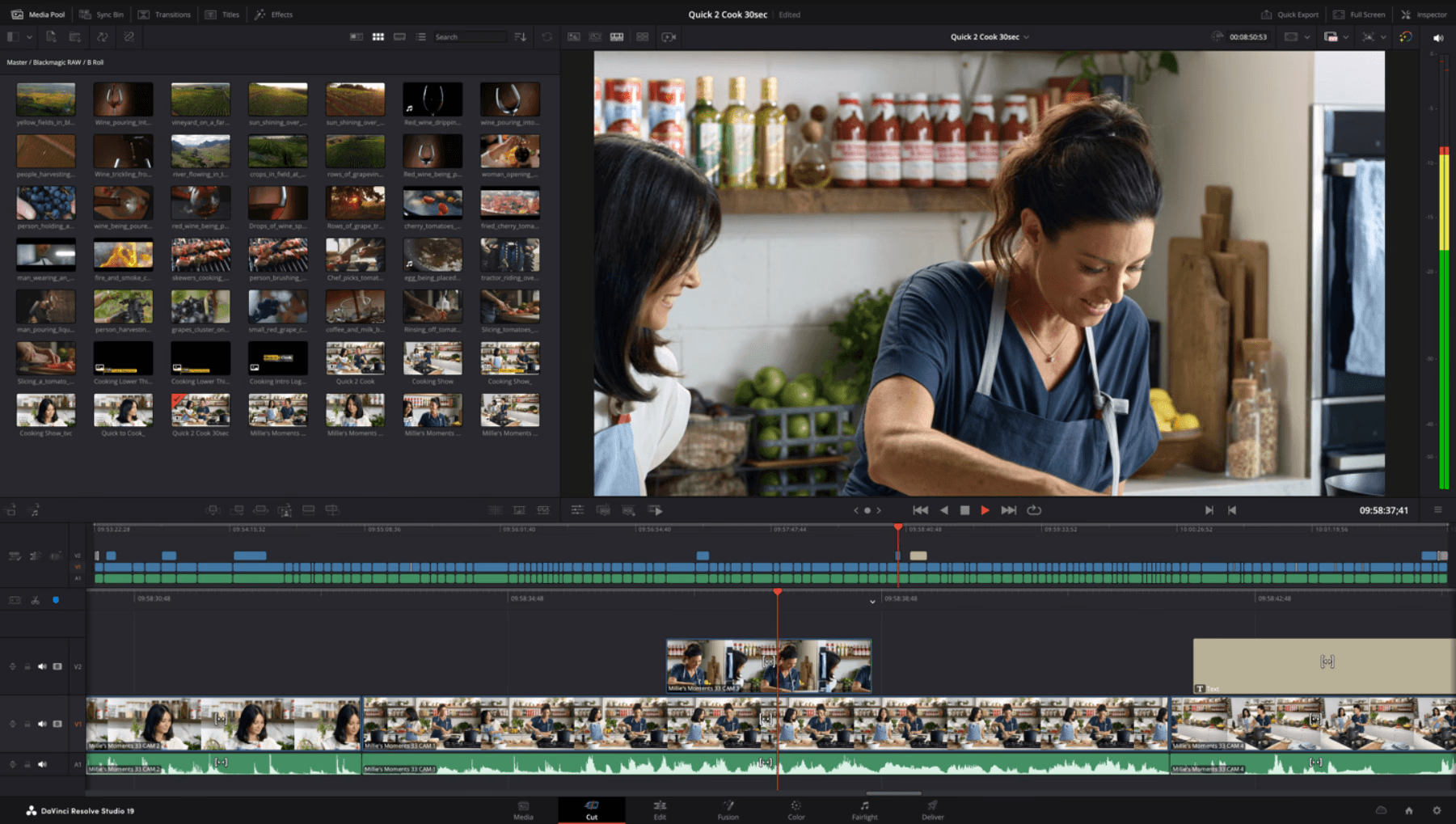
DaVinci Resolve combines editing, color grading, visual effects, motion graphics, and audio post-production. That depth makes it useful for films, YouTube videos, and client projects.
Blackmagic Design offers DaVinci Resolve 21 for free on Windows, macOS, and Linux. The free edition handles most 8-bit formats at up to 60 frames per second. Resolution tops out at Ultra HD 3840 x 2160.
The free version has no general branded watermark on normal exports. There is one catch. If you use a Studio-only filter or effect, Resolve places a watermark over that result.
DaVinci Resolve Studio costs $295. It adds the DaVinci AI Neural Engine, text-based editing, Magic Mask, noise reduction, and more effects. Studio also supports higher frame rates and resolutions beyond 4K.
Available on: Windows, macOS, and Linux
Pricing: Free; Studio costs $295
Best fit: Editors who need detailed color, audio, and effects controls
Pros:
A useful free version, not a short trial
Strong color correction tools
Editing, Fusion effects, and Fairlight audio in one program
Multi-user collaboration
Studio uses a one-time license rather than a subscription
Cons:
Takes longer to learn than CapCut
Runs best on capable hardware
Studio-only tools add a watermark when used in the free edition
The interface can feel excessive for a 30-second social clip
DaVinci Resolve is better when you care about the finish of a project. CapCut asks less of the editor and gets a short video out faster.
3. Movavi Video Editor: easier for desktop beginners
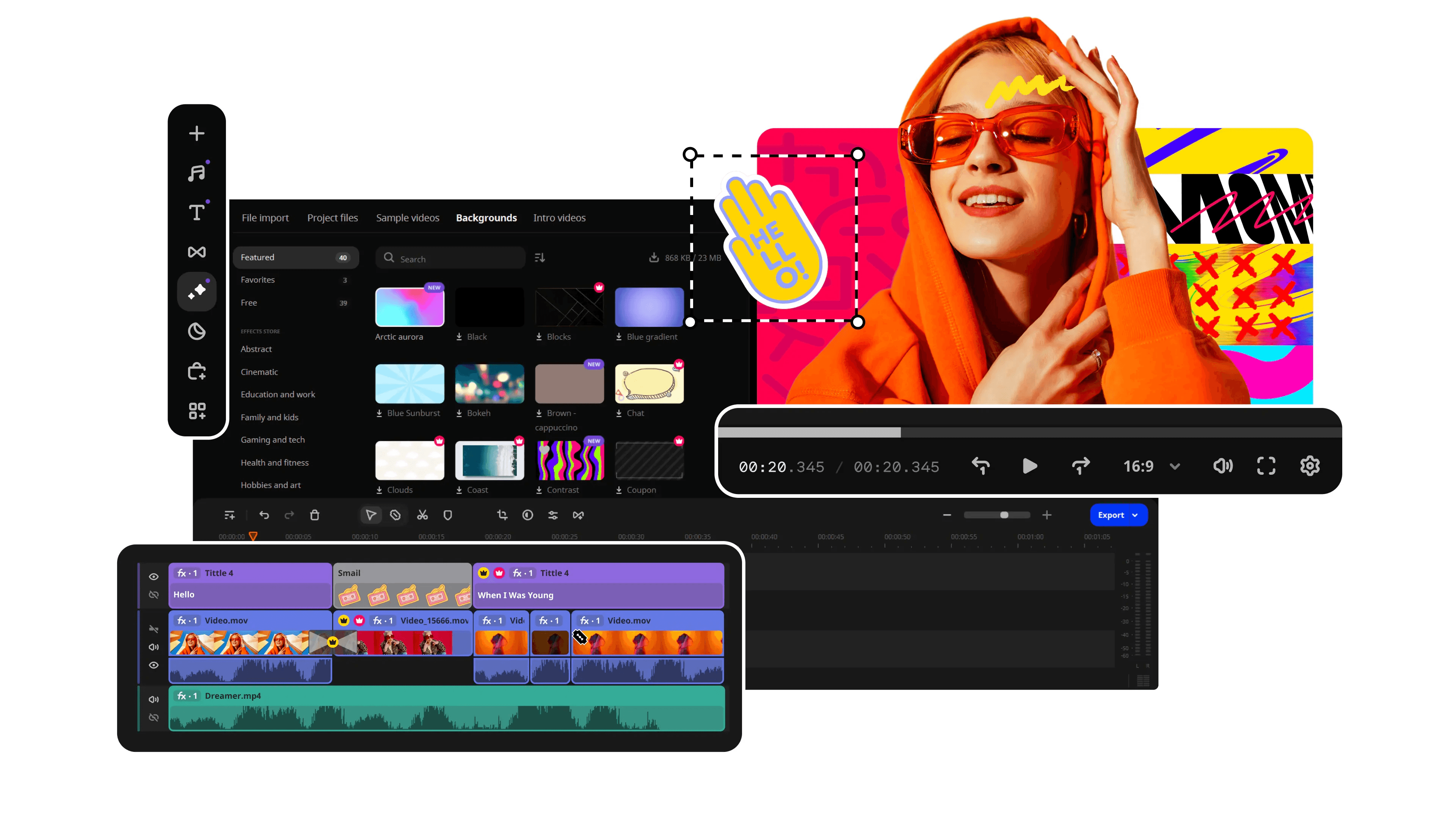
Movavi sits between CapCut and DaVinci Resolve. It has a conventional desktop timeline, but the interface does not bury new users in technical panels.
Movavi Video Editor 2026 includes trimming, transitions, overlays, subtitles, and 4K processing. Current versions also include motion tracking, background removal, noise removal, and automatic silence removal.
The free download is a trial, not a permanent free plan. Movavi says trial exports may carry a watermark, a 60-second video limit, or a half-length audio limit. The exact restriction depends on the build.
Available on: Windows and macOS
Pricing: Trial; subscription and perpetual options are available
Best fit: Beginners who want a simple desktop timeline
Pros:
Easy to learn
Clear timeline and editing controls
Automatic subtitles and silence removal
Motion tracking and background removal
Supports 4K processing
Cons:
The trial is limited
Store bundles can make pricing confusing
Effects packs may cost extra
Color and audio controls are lighter than DaVinci Resolve
Movavi works well for someone moving from phone editing to a computer. It keeps the learning curve manageable without copying CapCut’s mobile interface.
4. FlexClip: quick browser-based editing
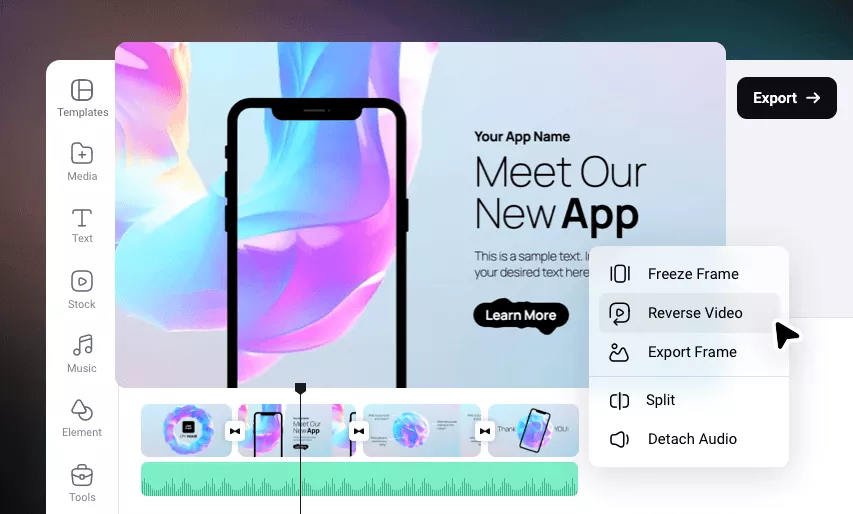
FlexClip is an AI-powered online video editor with ready-made templates, straightforward editing tools, and features such as AI video generation, automatic subtitles, and text-to-speech. It is a useful option when you want to create a quick video in a browser without installing desktop software.
The editor covers everyday tasks such as trimming, merging, changing speed, adding text, music, subtitles, and voiceovers. Projects stay online, so the workflow is convenient when you move between computers or collaborate with a team.
FlexClip also provides more than 6,000 editable templates and a built-in media library. Its AI tools can generate a video from a prompt, article, or URL, create scripts and voiceovers, produce automatic subtitles, translate content, and remove backgrounds.
The official site lists cloud storage, team collaboration, direct social sharing, and export up to 4K. A free plan is available, while paid subscriptions provide broader access to resources and features. Check the current plan page before exporting because limits can change.
Available on: Web browsers
Pricing: Free plan with optional paid subscriptions
Best fit: Beginners and teams creating quick social, marketing, or educational videos online
Pros:
Runs in a browser with no desktop installation
Large selection of editable templates and stock resources
AI video generation, scripts, subtitles, translation, and text-to-speech
Cloud storage and team collaboration
Export up to 4K on supported plans
Cons:
Needs a stable internet connection
Less precise than a full professional desktop timeline
Some AI tools, assets, and export options depend on the selected plan
Large uploads and complex projects can be slower in a browser
FlexClip is the easiest desktop-style option here when installation is the main barrier. Nero Video, DaVinci Resolve, and Movavi offer stronger local timelines, while FlexClip is faster for template-led projects, AI-assisted drafts, and team workflows in a browser.
Best mobile alternatives to CapCut
Mobile editors trade some precision for speed. They are better when the footage is already on your phone and the final destination is a social app.
1. VivaCut: more control over layered mobile edits
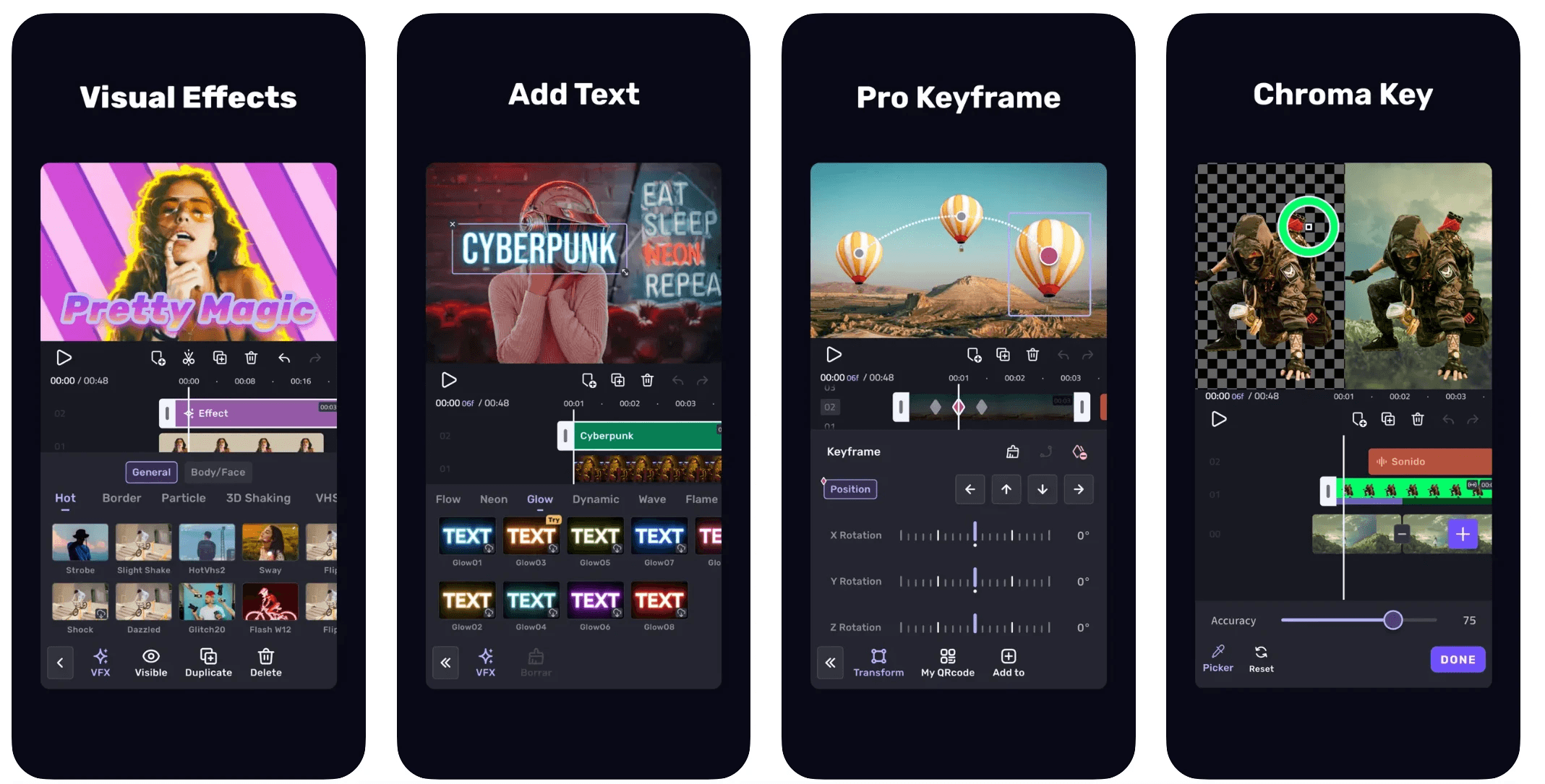
VivaCut uses a multi-layer timeline. You can stack video and audio, animate elements with keyframes, change speed, and work with chroma key.
The app also includes overlays, transitions, audio extraction, and color adjustments. These tools make it more flexible than a basic trim-and-post editor.
VivaCut is free to install, but the free export includes its watermark. Removing that mark requires Pro. Prices appear inside the app and vary by store.
Available on: Android and iOS
Pricing: Free with in-app purchases
Best fit: Mobile users who want layers, keyframes, and effects
Pros:
Multi-layer timeline
Keyframe animation
Chroma key and overlays
Speed and color controls
Useful transition and effect library
Cons:
Free exports carry a watermark
Pro is required for some tools
Layered projects can be demanding on older phones
The interface takes more time to learn than InShot
Pick VivaCut when you want to build an edit by hand on a phone. LightCut is faster when you would rather start from an automatic cut.
2. InShot: quick edits for Reels and Shorts
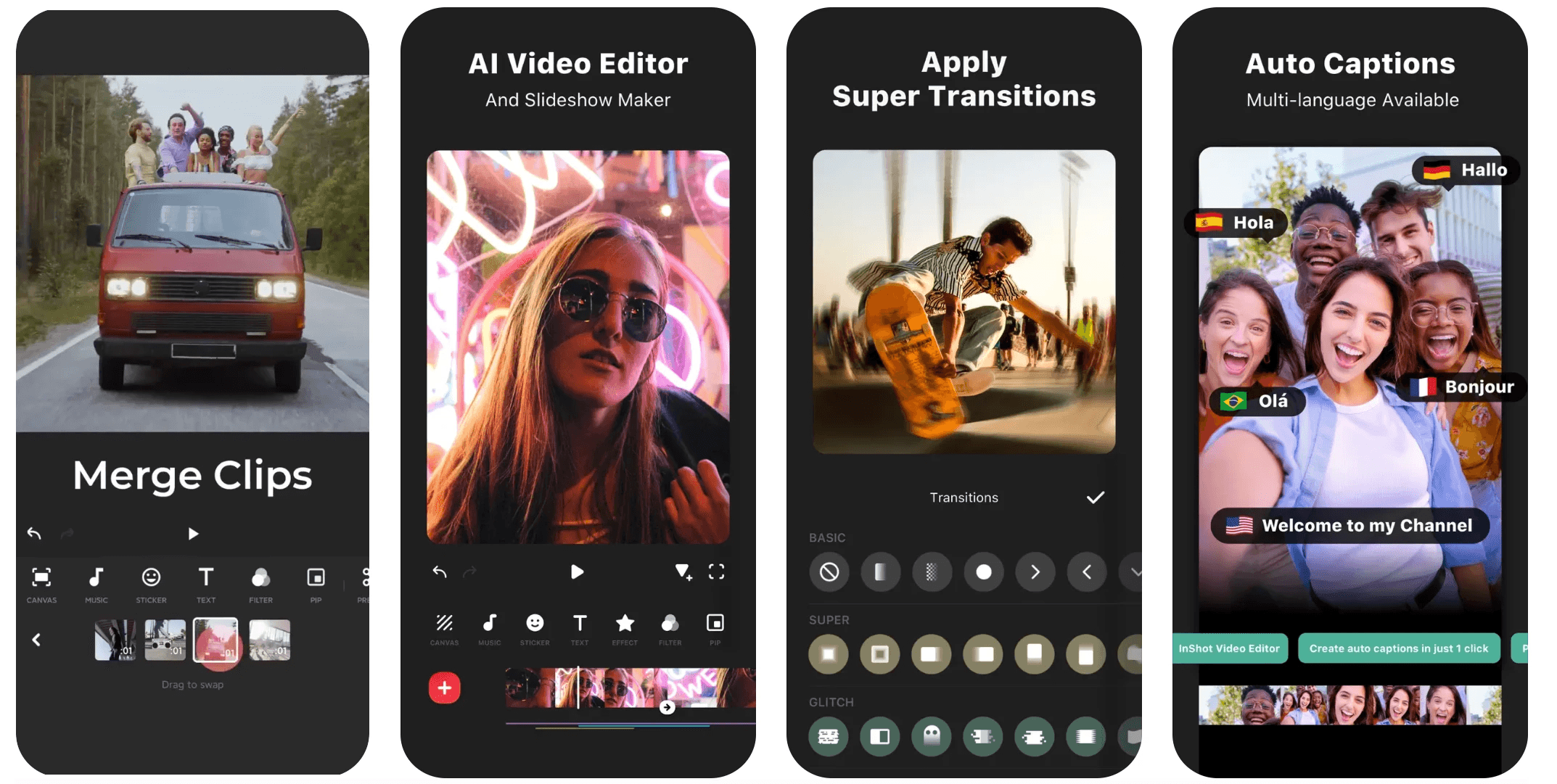
InShot is designed around fast mobile editing. Its main tools cover trimming, cropping, music, text, transitions, captions, and speed changes.
Aspect ratio controls help when one clip needs versions for TikTok, Instagram, or YouTube. InShot also includes photo editing and collage tools in the same app.
The app is free with advertising and in-app purchases. The US App Store listed InShot Pro at $4.99 monthly or $19.99 yearly. Lifetime access was listed at $49.99. Those prices may differ elsewhere.
InShot’s store listing says Pro removes the watermark and advertisements. It also lists auto captions, background removal, smart tracking, and exports up to 4K at 60 frames per second.
Available on: Android and iOS
Pricing: Free with ads and in-app purchases
Best fit: Reels, Shorts, and everyday social posts
Pros:
Simple timeline
Fast cropping and resizing
Auto captions and smart tracking
Music, text, filters, and transitions
4K 60 fps export is listed on iOS
Cons:
Pro is needed to remove the watermark and ads
Less suited to complex multi-layer projects
Some effects and assets require payment
Desktop use is limited compared with the PC editors above
InShot is easier to pick up than VivaCut. The trade-off is less control when a project grows beyond a few clips and overlays.
3. VLLO: free exports without a watermark
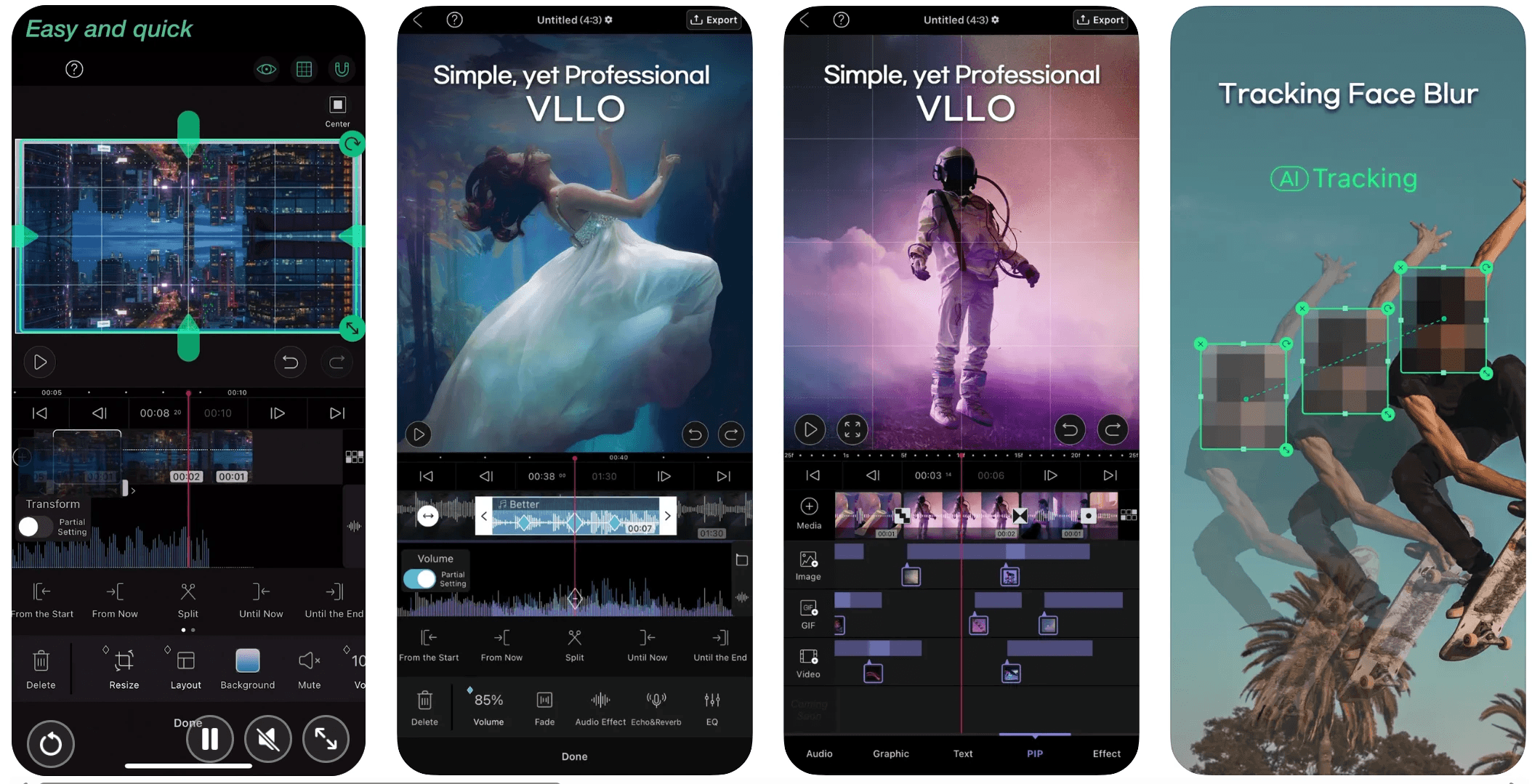
VLLO is the clearest choice here for free mobile export. Its official site says users can export an unlimited number of videos without a watermark, payment, or export fee.
The editor still has more than basic cutting tools. VLLO includes picture-in-picture layers, keyframes, chroma key, filters, transitions, and audio controls.
Auto captions, tracking, background removal, and AI voice tools are also listed. Some premium assets and AI services require a purchase, even though standard exports remain watermark free.
Available on: Android and iOS
Pricing: Free with optional premium purchases
Best fit: Mobile creators who want clean free exports
Pros:
Unlimited exports without a watermark
Multi-track and picture-in-picture editing
Keyframes and chroma key
Auto captions and tracking
4K export
Cons:
Some AI features and assets cost extra
No full desktop editing version
Large projects are harder to manage on a small screen
CapCut has a broader social template ecosystem
VLLO makes the most sense when a watermark is the deal-breaker. It has enough manual tools for regular social and YouTube work without forcing a subscription first.
4. LightCut: fast automatic editing
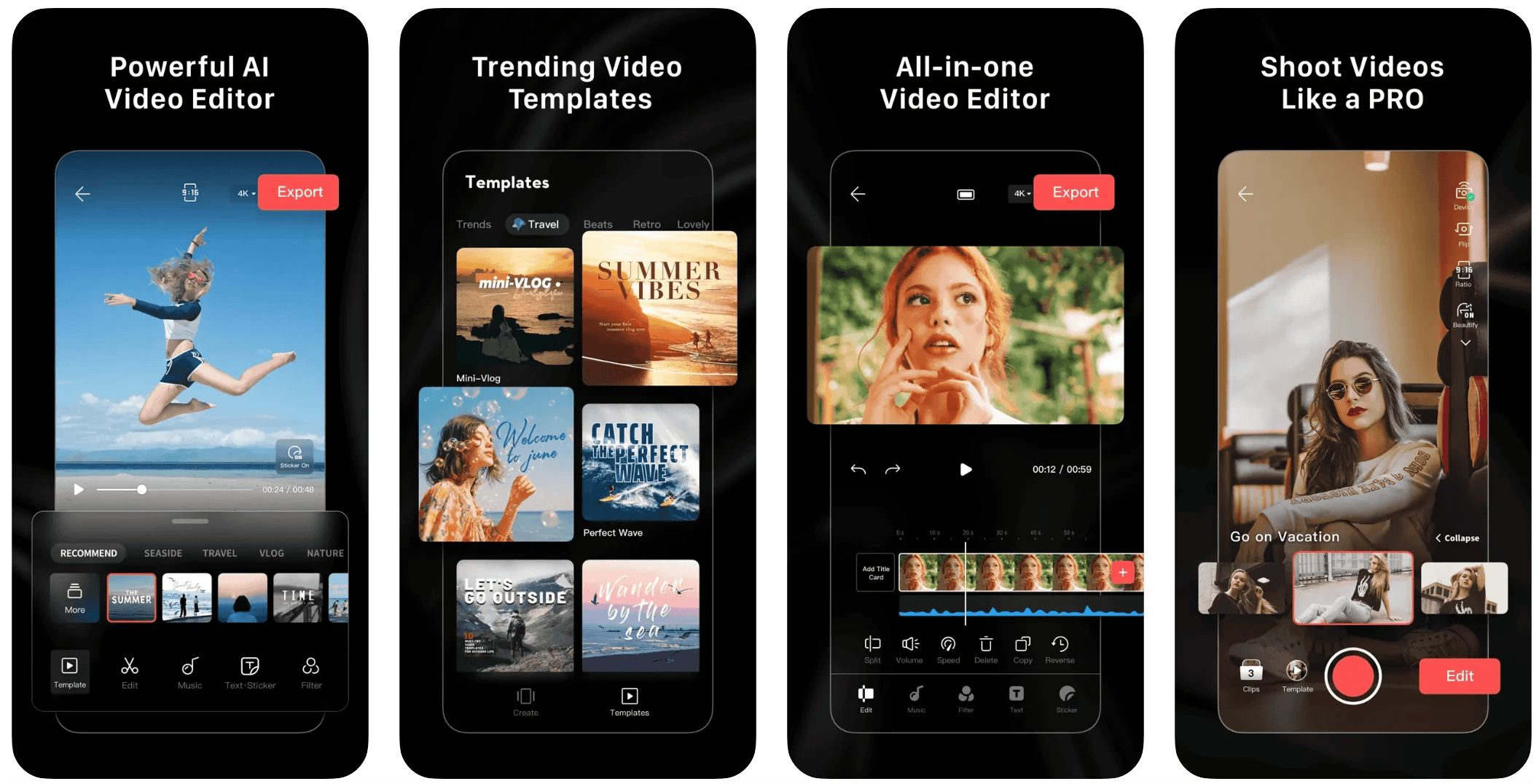
LightCut builds a first cut from the clips and photos you select. Its One-Tap Edit tool analyzes the footage, chooses moments, and matches them to a template.
DJI officially recommends the app, although it also works with ordinary phone footage. Direct connections support several DJI drone, Osmo Action, Osmo Pocket, and Osmo Mobile devices.
The App Store listing describes LightCut as free and says it supports 4K export without a watermark. Manual tools include trimming, speed adjustment, text, music, filters, effects, and transitions.
Available on: Android and iOS
Pricing: Free
Best fit: Automatic edits, travel clips, and DJI footage
Pros:
One-Tap Edit creates a quick first cut
Free 4K export without a watermark
Templates for travel and action footage
Direct editing support for selected DJI devices
Basic manual tools are included
Cons:
Automatic edits give you less control
Template results can look familiar
It is not built for complex timelines
VivaCut is better for detailed manual compositing
LightCut is useful when speed matters more than precision. It is especially convenient when the footage comes from a supported DJI device.
Which CapCut alternative should you choose?
If you need… | Start with… |
A Windows editor with a one-time license | Nero Video |
Professional desktop tools for free | DaVinci Resolve |
An easier Windows or Mac timeline | Movavi Video Editor |
Quick editing without installing software | |
Layers and keyframes on a phone | VivaCut |
Fast social edits | InShot |
Free mobile exports without a watermark | VLLO |
Automatic editing and DJI support | LightCut |
For Windows projects, Nero Video is the practical middle ground. It has more desktop control than CapCut without DaVinci Resolve’s learning curve.
DaVinci Resolve is the stronger choice for color work, audio, and effects. Movavi suits people who want a gentler introduction to desktop editing, while FlexClip is useful for fast browser-based projects.
Mobile users have a different decision. VivaCut gives you more manual control, while InShot keeps routine social edits simple. VLLO removes the watermark problem. LightCut does more of the first edit for you.
Frequently asked questions
What is the best CapCut alternative?
The answer depends on where you edit. Nero Video suits Windows users who want a one-time license. DaVinci Resolve is better for professional desktop work. VLLO is a good mobile choice when you need free exports without a watermark.
What is the best CapCut alternative for PC?
Nero Video is a straightforward Windows alternative with a perpetual license. DaVinci Resolve has more professional tools but takes longer to learn. Movavi is easier for beginners and also supports macOS. FlexClip is a convenient choice when you prefer to edit online without installing software.
Is there a free CapCut alternative without a watermark?
Yes. VLLO offers free mobile exports without a watermark. LightCut also lists watermark-free 4K export. DaVinci Resolve has no general export watermark, but Studio-only effects add one when used in the free edition.
Which app is most similar to CapCut?
InShot feels closest when the job is a quick social video. VivaCut is a better match for layered mobile editing. LightCut covers the automatic template side of CapCut.
Is CapCut still free in 2026?
CapCut still has a free tier. Paid plans and credits unlock additional tools, templates, AI services, and cloud features. The company says prices vary by region and platform, so check the upgrade screen for the current amount.
Final pick
Editing on Windows? Try Nero Video if you want a one-time license and a traditional timeline. DaVinci Resolve makes more sense when you need professional control. Movavi is easier when you are still learning desktop editing, while FlexClip is better for quick browser-based creation with templates and AI tools.
On a phone, the choice is more specific. Use VivaCut for layered work or InShot for quick social posts. VLLO is the safer pick when you refuse to pay just to remove a watermark. LightCut works best when you want an automatic first cut.
Check the current price and export rules before you commit. App stores change plans often, and the cheapest option in one country may not be the cheapest somewhere else.