On July 1, 2026, Sony gave physical-media fans a date to circle. According to the official PlayStation announcement, physical disc production will end for all new games released on PlayStation consoles starting in January 2028. Sony says the change will not affect games released in disc format before that date. Even so, the announcement makes the direction of travel hard to miss: another major entertainment platform is moving new releases toward digital-only distribution.
That shift reaches well beyond games. Music and films already live inside streaming libraries, store accounts, and subscription plans. Access is quick, but it depends on a platform continuing to carry the title and recognize the account. A CD or DVD works differently. It is a copy you can hold, store, lend, or play without waiting for a catalog agreement to be renewed.
CDs and DVDs still matter in 2026 because they give their owners a tangible copy, predictable offline access, and a record of a particular release. Digital files are easier to use across modern devices, but they do not have to replace the original disc. For many collections, keeping both is the more practical choice.
Are CDs and DVDs coming back in 2026?
Some physical formats are growing again, but “comeback” needs context. The market is not returning to the days when every album arrived on CD and every film release occupied a wall of shelves at the local store.
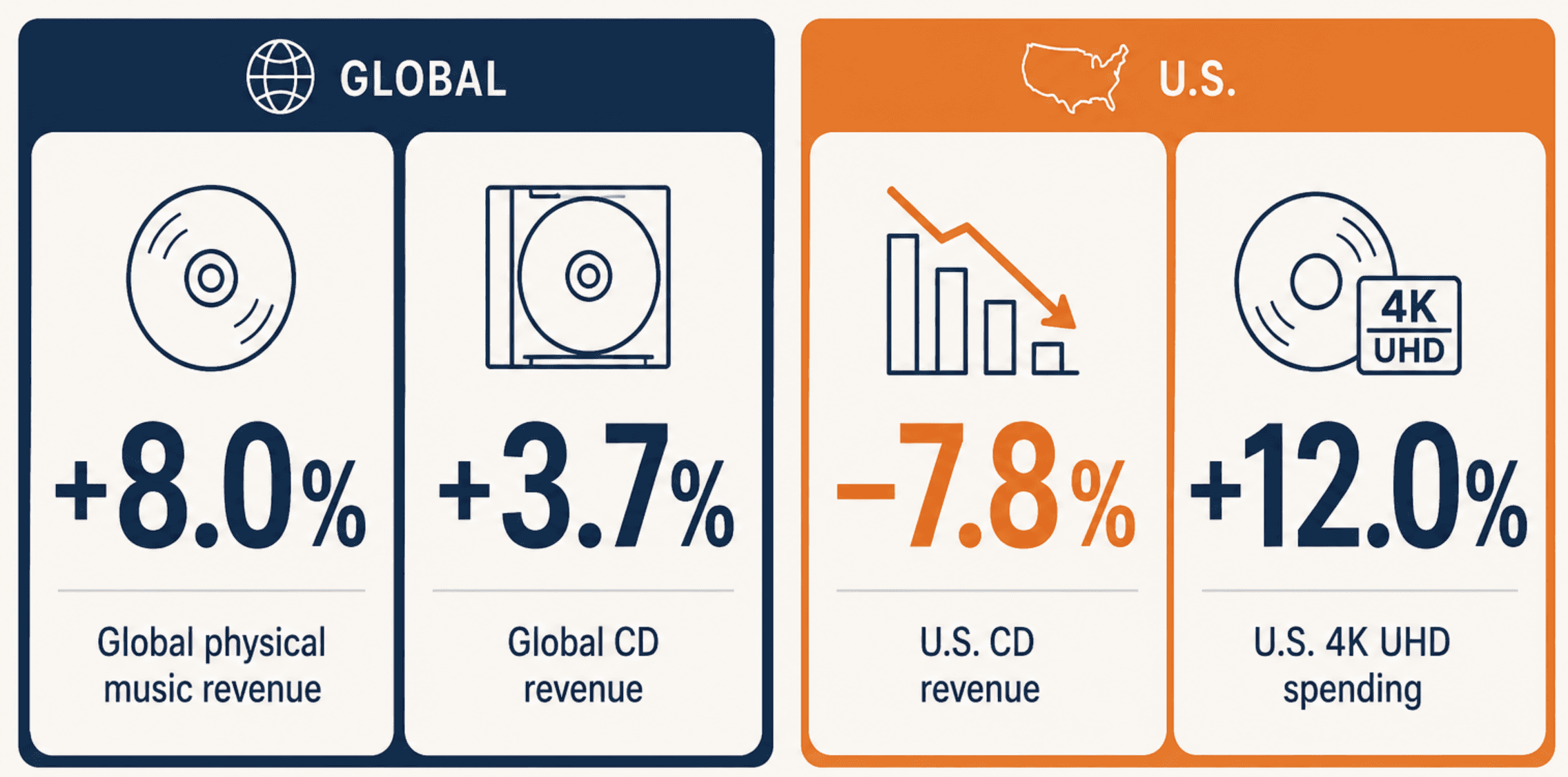
Music offers the clearest evidence of renewed demand. According to the IFPI Global Music Report 2026, worldwide revenue from physical music formats grew 8% in 2025. CD revenue rose 3.7%, while vinyl posted its nineteenth consecutive year of growth.
The picture changes when you look at individual countries. In the United States, RIAA’s 2025 year-end report recorded 29.5 million CD units, down 11.6% from 2024. CD revenue fell 7.8% to $312.4 million. Total physical music revenue still rose 5%, while vinyl revenue increased 9.3% to just over $1 billion.
DVDs tell a different story. In the United States, subscription streaming accounted for more than 92% of home-entertainment spending in 2025. The Digital Entertainment Group’s 2025 report says spending across DVD, Blu-ray, and 4K UHD fell by less than 10%. Within that declining market, the smaller premium 4K UHD category grew 12%. That is evidence of demand for a collectible premium format, not a broad DVD comeback.
So, are CDs and DVDs coming back? CDs are growing in some markets and holding a smaller but active audience in others. DVDs are better described as a durable niche than a revival. Neither format needs to regain its old mass-market position to remain useful.
Why physical media still matters
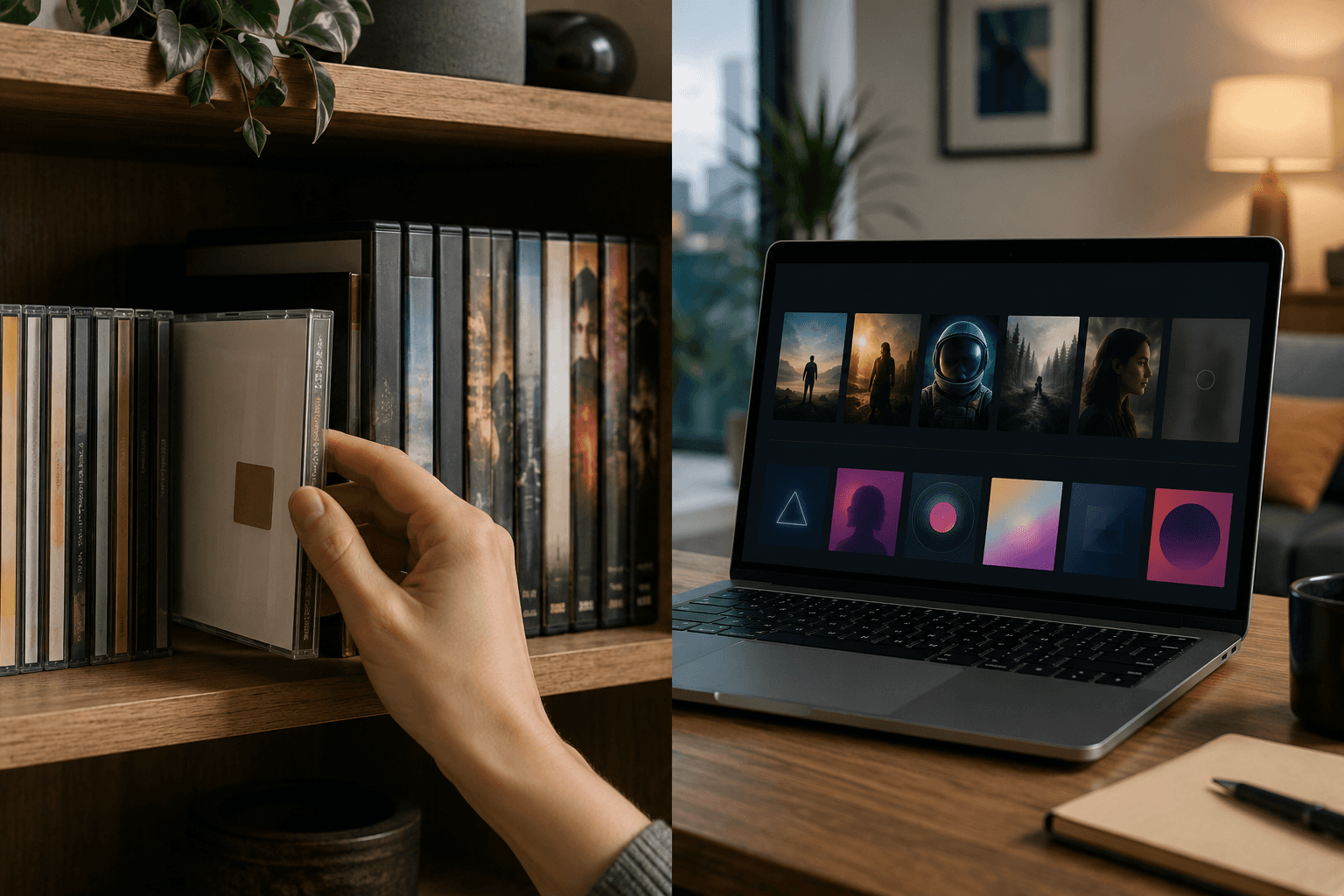
Streaming solved a real problem. It put large catalogs within reach without requiring shelves, disc drives, or trips to a store. What it did not provide was the same relationship between the buyer and the copy.
A disc gives you a copy, not a place in a catalog
Buying a CD or DVD gives you possession of that physical copy, though copyright in the content remains with its rights holder. A streaming subscription, by contrast, provides access to whatever the service currently offers. Titles can move between platforms as licensing deals change, and a purchased digital title may still depend on an account, app, compatible device, or storefront.
Physical ownership has limits too. A disc can be scratched, lost, or damaged by poor storage. Some game and software releases rely on online activation, updates, or downloadable content. Region settings and copy protection may also affect where and how a DVD plays. Keeping the case on a shelf does not guarantee permanent access, but it removes one common point of failure: the title disappearing from a service’s catalog.
A specific edition can be worth preserving
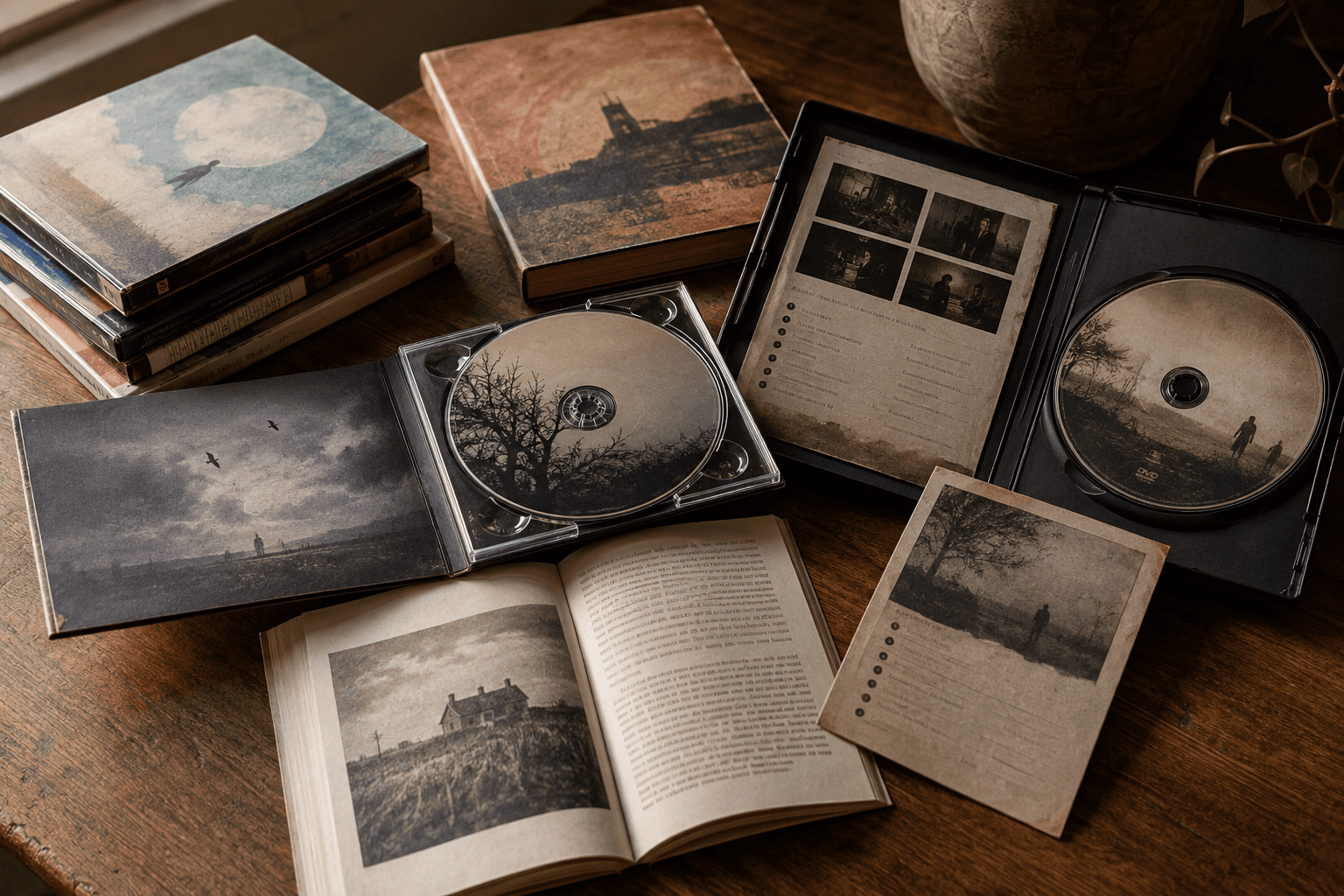
Streaming usually presents the version a platform has licensed today. A disc may preserve an older cut, a particular audio mix, commentary tracks, deleted scenes, liner notes, artwork, or bonus material that never reached streaming.
Those details matter to more than collectors. A musician may want the mastering used on an earlier CD release. A film viewer may prefer the original edit to a later replacement. Families often have home videos or photo archives stored on recordable discs, where the content has personal value even if the format feels dated.
None of this means every edition is rare or financially valuable. Most are not. Their value lies in knowing exactly which version you own and being able to return to it without searching several services first.
Offline playback still has a place
A normal audio CD or movie DVD does not need a broadband connection. That makes discs useful in rooms with unreliable Wi-Fi, on older entertainment systems, and in situations where a subscription login is inconvenient. Playback still requires compatible hardware, of course. Many new laptops omit optical drives, so an external USB drive may be necessary.
The same tradeoff explains why digital copies are useful. A ripped audio file is easier to play on a phone, computer, or networked speaker than the original disc. Convenience improves when the collection becomes portable; ownership remains with the physical copy.
Physical copies can be lent, given away, or resold
Most digital entertainment purchases are tied to one account and cannot be transferred freely. A physical disc can often be lent to a friend, passed to a family member, donated, or sold secondhand. The exact rights depend on local law and the type of media, but the object itself is not locked inside a personal storefront account.
Resale is not a promise of profit. Common titles may be worth very little, while storage and shipping take time. The point is simpler: a disc remains an object its owner can usually transfer.
Three ways to keep a disc collection useful
Preserving physical media does not require turning every shelf into an archival project. Three practical actions cover most everyday collections: rip audio CDs for convenient listening, keep DVDs playable on current hardware, and back up personal or data discs before age or damage makes them difficult to read.
Rip audio CDs for everyday listening
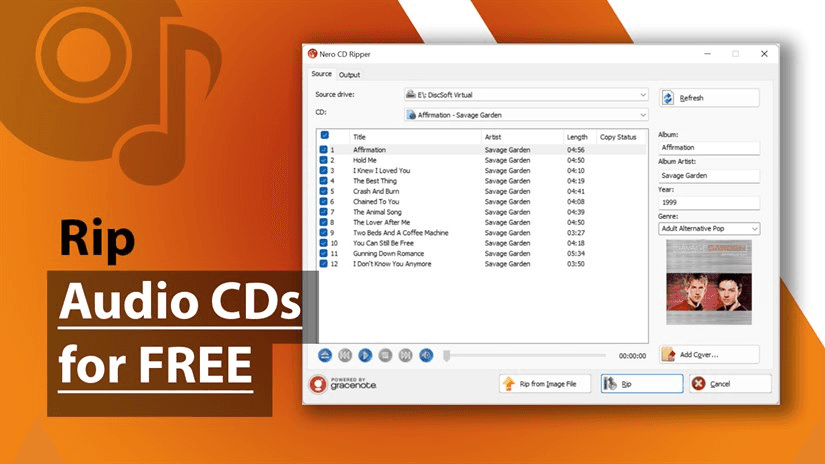
Ripping extracts the audio tracks from a CD and encodes them as files on a computer. FLAC is a sensible choice when lossless storage matters because the format does not discard audio data during encoding. MP3 files are usually smaller and have broad device support. There is no need to compare every codec before getting started. Pick the format that suits how you plan to listen, keep the original disc, and label the album files clearly enough to find them later.
Nero CD Ripper converts audio CDs to MP3, AAC, WAV, FLAC, AIFF, and OGG on Windows. Selected features, including Gracenote metadata retrieval and ripping from NRG image files, require a subscription. Nero also provides a separate step-by-step CD ripping guide for readers who need the full workflow.
Copyright rules differ by country. Owning a disc does not automatically grant permission to bypass copy protection or share the resulting files. In the United States, for example, Section 1201 of the Copyright Act generally prohibits circumventing access controls, subject to specific exemptions. Users should check the law and license terms that apply where they live.
Keep DVDs playable on modern Windows PCs
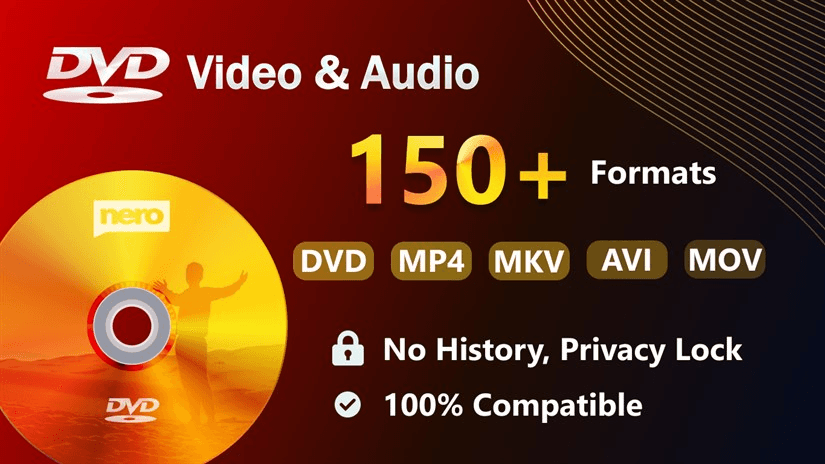
DVD playback now has two common obstacles: the computer may not include an optical drive, and the operating system may not include suitable playback software. A compatible external USB DVD drive addresses the first problem. Nero DVD Player supports DVD-Video discs and structures on Windows.
Nero advertises a region-free setup for DVDs from different regions. Actual playback can still depend on the disc, optical drive, system configuration, and any protection applied to the content. Check the disc packaging and hardware compatibility rather than assuming every DVD will play on every computer.
Back up personal and data discs while they still read reliably
Home videos, photographs, documents, and other personal files deserve more attention than commercial titles that can still be replaced. If a recordable CD or DVD contains the only copy, move the files to current storage before the disc becomes difficult to read. Keep another copy in a separate location, then test the files instead of assuming the transfer worked.
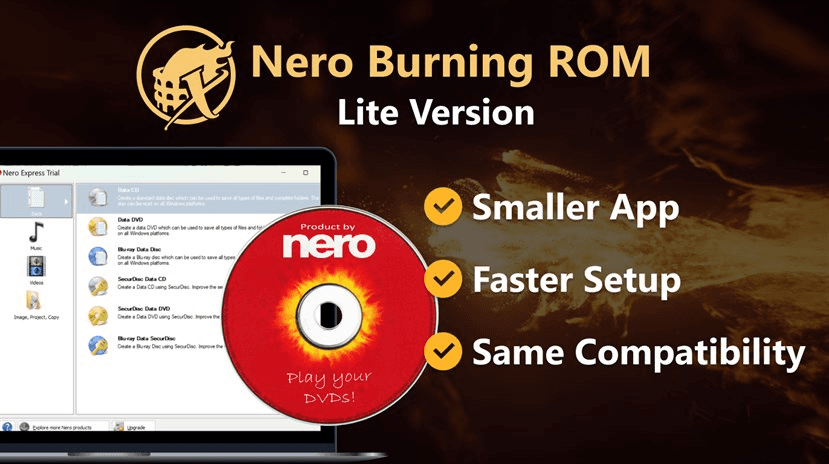
When you need to create or update personal data discs, Nero Express provides a wizard-guided burning workflow. Nero Burning ROM offers more control for burning, copying, data protection, and backup tasks. The existing guide to burning CDs, DVDs, and Blu-ray discs on Windows covers the detailed steps, so there is little value in repeating them here.
Commercial movie and game discs are a different category from personal data. Do not assume that backup rights extend to bypassing DRM or other technical protection measures.
Physical or digital? Why keeping both makes sense
The choice depends on what you expect the format to do. Physical media is better suited to collecting, offline playback, resale, and keeping a known edition. Digital access is easier when you want immediate playback across several devices and do not want to store boxes.
If you care most about... | Better starting point |
Owning a tangible copy | Physical media |
Playing content instantly on several devices | Digital access |
Lending, gifting, or reselling | Physical media |
Saving shelf space | Digital access |
Keeping a specific edition | Physical media |
Convenient daily listening | Digital files |
Maintaining long-term personal access | Original media plus a lawful digital copy and backup |
A hybrid collection does not need a complicated system. Keep the original discs you care about. Rip audio CDs where local law permits, use suitable hardware and software to play DVDs, and copy personal files off aging data discs. Store important files in more than one place and check them occasionally.
This approach also makes the limitations easier to manage. The disc protects against a title leaving a streaming service; the digital copy reduces wear on the disc and works on newer devices. A backup covers the possibility that either copy fails. No single format does everything well, but the combination is practical.
Sony’s 2028 decision will not end physical media. It does show how quickly a platform can change the way new content is sold. If a CD, DVD, or personal data disc matters to you, the useful response is not panic-buying or assuming it will last forever. Keep the original, make it accessible, and back up the files you cannot replace.
Frequently asked questions
Are CDs making a comeback in 2026?
CD revenue grew globally in 2025, but the trend varies by market. IFPI reported 3.7% worldwide CD revenue growth, while RIAA recorded declines in both CD units and revenue in the United States. CDs have renewed momentum in some regions without returning to their former market dominance.
Are DVDs making a comeback?
DVDs are not experiencing the same broad revival associated with vinyl. Streaming still dominates home video, although collectors continue to buy DVDs, Blu-rays, and 4K UHD editions for ownership, bonus content, picture quality, or access to titles that are difficult to stream.
Is physical media better than streaming?
Neither format is better for every purpose. Physical media provides a tangible copy and predictable offline access. Streaming is more convenient and takes up no shelf space, but its catalog can change. Keeping physical favorites alongside digital access often gives users the best balance.
How long do CDs and DVDs last?
There is no single lifespan that applies to every disc. The Library of Congress notes that manufacturing, recording quality, heat, humidity, light, storage, and handling all affect optical-media longevity. Recordable discs also depend on compatible hardware and software. Important personal files should not remain on one optical disc as their only copy.
Can I legally rip CDs and DVDs I own?
The answer depends on local law, the type of content, and whether copy protection is involved. Ownership of a disc does not necessarily permit someone to bypass DRM or distribute copied files. Check the applicable rules and license terms before creating a digital copy.
What is the best format for ripping a CD?
FLAC is a good option for lossless storage because it reduces file size without discarding audio data during encoding. It cannot correct errors introduced while a damaged disc is being read, so the quality of the rip still matters. MP3 normally produces smaller files and is more widely compatible.